Don’t build a leadership development plan on assumptions. Build it on assessment.
A leadership assessment helps business owners and HR leaders evaluate leadership capabilities before investing in development. It measures areas such as decision-making, communication, delegation, and accountability to identify strengths, uncover development priorities, and guide a targeted leadership development plan.
The strongest leadership development programs begin with a clear understanding of where leaders need support. A leadership assessment provides the direction needed to prioritize development, strengthen leadership performance, and make informed investment decisions.
What a Leadership Assessment Actually Measures
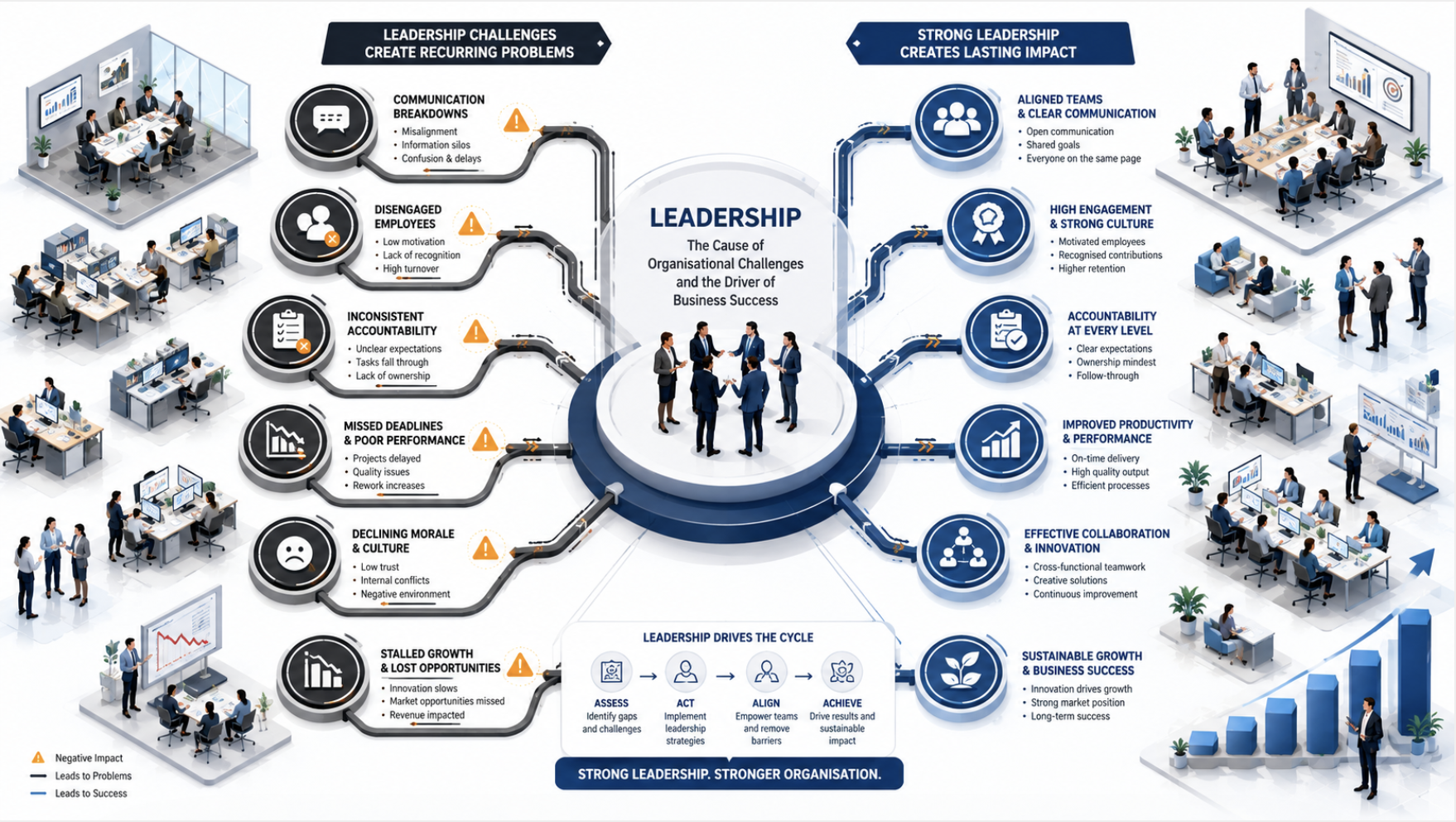
A leadership assessment measures the leadership behaviors that influence team performance and business execution. It is not a personality test or a leadership style quiz. Instead, it evaluates how leaders make decisions, communicate expectations, hold people accountable, and delegate responsibilities.
Decision-Making
Effective leaders make timely decisions, establish clear priorities, and respond to challenges with confidence. A leadership assessment evaluates how leaders make decisions, solve problems, and balance immediate priorities with long-term business objectives.
Communication
Clear communication helps teams understand priorities, responsibilities, and performance expectations. A leadership assessment measures how leaders communicate direction, provide feedback, and keep teams aligned on shared goals.
Accountability
Accountability begins with leadership. A leadership assessment evaluates whether leaders follow through on commitments, address performance issues, and create clear expectations for individual and team performance.
Delegation
Effective delegation allows leaders to focus on strategic priorities while developing their teams. A leadership assessment identifies whether leaders assign responsibility appropriately, provide the support employees need, and avoid becoming a bottleneck for decisions or daily operations.
These categories provide a practical view of leadership performance. They help organizations identify leadership gaps and prioritize development before investing in leadership training.
Individual vs. Team-Level Leadership Assessments
Many leadership assessments focus on individuals. These assessments help leaders understand their own leadership style, behaviors, or development areas. While that information is valuable, it does not show how leadership practices affect the organization as a whole.
A team-level leadership assessment evaluates leadership across managers, supervisors, or department leaders. Instead of focusing on one person’s results, it identifies shared leadership gaps in areas such as communication, delegation, decision-making, and accountability.
For example, an assessment may show that managers communicate performance expectations differently or delegate responsibilities inconsistently. These patterns can create confusion, slow execution, and make it difficult to maintain consistent leadership standards across the organization.
Understanding these shared patterns helps business owners and HR leaders build a targeted leadership development plan instead of relying on the same training for every leader. Trifecta’s Team Assessments help organizations identify leadership gaps across the business and prioritize development where it is needed most:
Signs It’s Time to Assess Your Leadership Team
Leadership gaps often become visible through everyday operations before they affect business performance. Recognizing these patterns early helps business owners and HR leaders identify where leadership development is needed.
Inconsistent Execution
Teams should be able to deliver consistent results using the same processes and standards. If similar teams produce different outcomes, projects are managed differently, or customer experiences vary depending on the manager, leadership practices may not be aligned. A leadership assessment can identify differences in decision-making, communication, delegation, and accountability across the leadership team.
Unclear Expectations
Employees perform best when leaders communicate clear expectations. If priorities change without explanation, responsibilities overlap, or managers apply different performance standards, teams can lose alignment. A leadership assessment evaluates whether leaders communicate expectations consistently and provide clear direction across departments.
The Owner Becomes the Bottleneck
Many growing businesses reach a point where managers depend on the owner to approve decisions, solve operational problems, or resolve routine issues. While this approach may work in the early stages of growth, it becomes difficult to scale. A leadership readiness assessment helps identify where managers need additional development so they can make decisions confidently, take ownership of their responsibilities, and reduce the owner’s day-to-day involvement.
What to Do with the Results
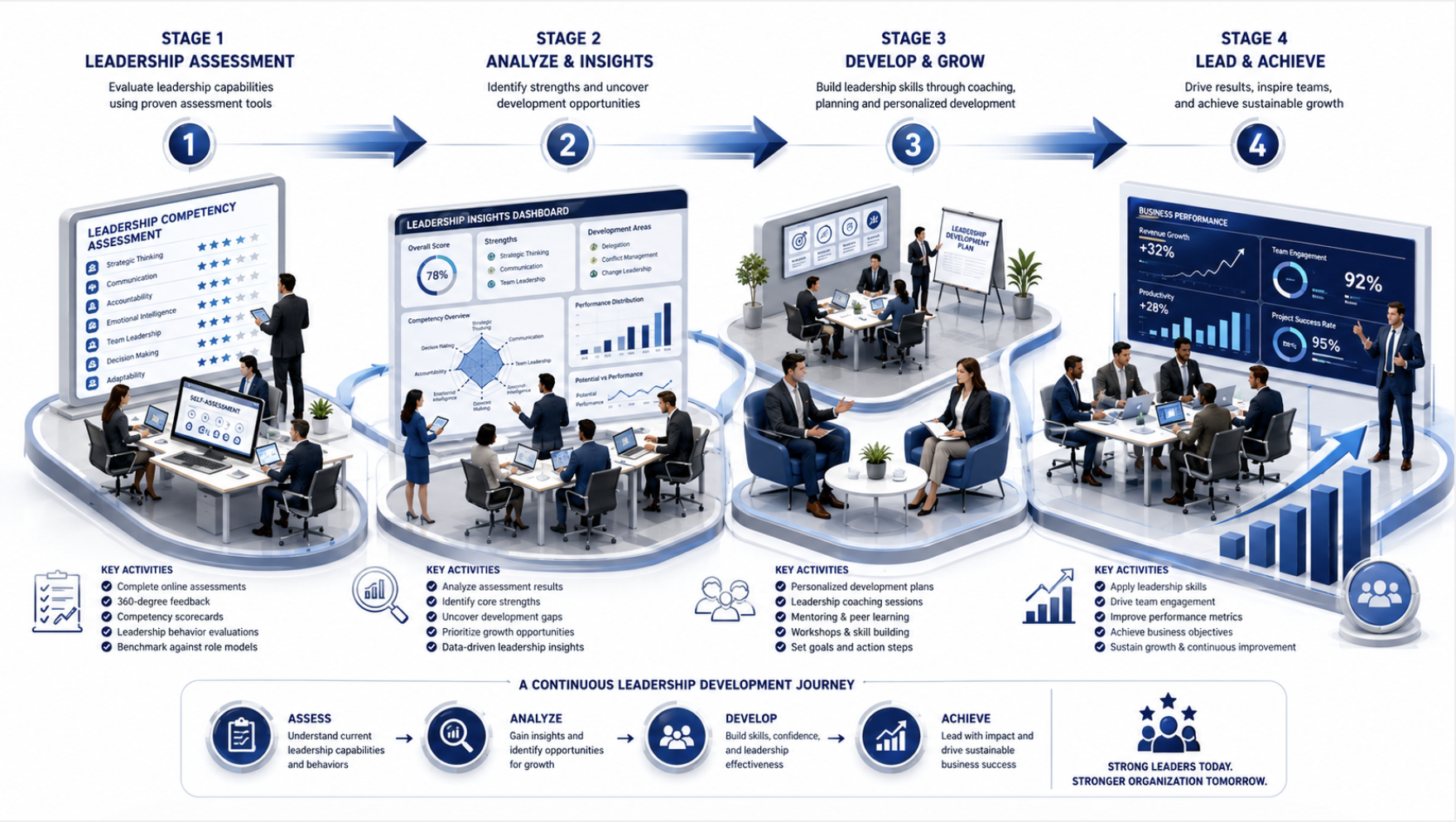
A leadership assessment creates value when the findings lead to action. Completing an assessment is only the first step. The next step is using the results to build a targeted leadership development plan.
Don’t build a leadership development plan on assumptions. Build it on assessment findings.
An effective development plan should:
- Prioritize the leadership capabilities that need the most attention.
- Match development activities to identify leadership gaps instead of assigning the same training to every leader.
- Establish consistent leadership expectations across managers and departments.
- Reinforce learning through leadership coaching, feedback, and ongoing development.
- Measure progress over time and adjust development priorities as business needs evolve.
This approach helps organizations avoid generic leadership programs that may not address their actual leadership challenges. Instead, development efforts focus on the leadership capabilities that will best support business objectives and improve leadership performance.
Trifecta’s Free Assessment Tools
Leadership development starts with a clear understanding of your team’s current capabilities. Trifecta’s free assessment tools help business owners and HR leaders identify leadership gaps before investing in training.
The Leadership Readiness Assessment provides a structured way to evaluate leadership capabilities and identify development priorities across your leadership team. Start with the Leadership Readiness Assessment to establish a baseline before creating a leadership development plan.
The Team Performance Diagnostic Worksheet complements that assessment by helping organizations evaluate how leadership practices affect team performance, communication, accountability, and execution. Use the Team Performance Diagnostic Worksheet to identify opportunities for improvement across teams and departments.
Frequently Asked Questions
How is a leadership assessment different from a personality test?
A leadership assessment evaluates practical leadership capabilities such as decision-making, communication, accountability, and delegation. A personality test measures individual traits or preferences. It does not evaluate leadership performance or identify leadership gaps across a team or organization.
How often should a leadership team be reassessed?
There is no standard schedule. Many organizations reassess their leadership team after leadership development initiatives, organizational changes, or significant business growth. Reassessment helps measure progress, identify new leadership gaps, and update development priorities.
Can a leadership assessment be done for just one manager, or does it need to be team-wide?
A leadership assessment can support the development of an individual manager. However, a team-level assessment provides a broader view of leadership performance across managers and departments. It helps identify shared leadership gaps, improve leadership consistency, and prioritize organization-wide leadership development.
What happens after we get our assessment results?
Assessment results should guide a targeted leadership development plan. Prioritize the highest-impact leadership gaps first, then align coaching, training, and development activities with those identified needs. Avoid using the same development plan for every leader.
Is a free assessment tool accurate enough to act on?
A free leadership readiness assessment provides a structured starting point for identifying leadership capabilities, leadership gaps, and development priorities. The results help organizations determine where additional leadership development or a team assessment may provide the greatest value.
Take the Leadership Readiness Assessment
Leadership development starts with understanding where your leadership team stands today.
Don’t build a leadership development plan on assumptions. Start with a clear assessment of your team’s leadership capabilities, then focus development where it will have the greatest impact.
Take Trifecta’s free Leadership Readiness Assessment to identify leadership gaps, establish development priorities, and build a more targeted leadership development plan.