What Is the Coaching Leadership Style?
The coaching leadership style is a leadership approach that develops employees through thoughtful questions, reflection, constructive feedback, and guided ownership rather than direct instruction. Instead of telling employees exactly what to do, coaching leaders help them think critically, evaluate options, and develop solutions on their own.
Rather than providing every answer, coaching leaders create opportunities for learning while maintaining clear expectations and accountability. This approach develops employees’ decision-making skills, builds confidence, and encourages greater ownership of their work.
At its core, coaching leadership focuses on developing people while achieving business goals. As employees become more capable and accountable, leaders can delegate more effectively, strengthen team performance, and build a more resilient organization.
Coaching vs. Directive Leadership
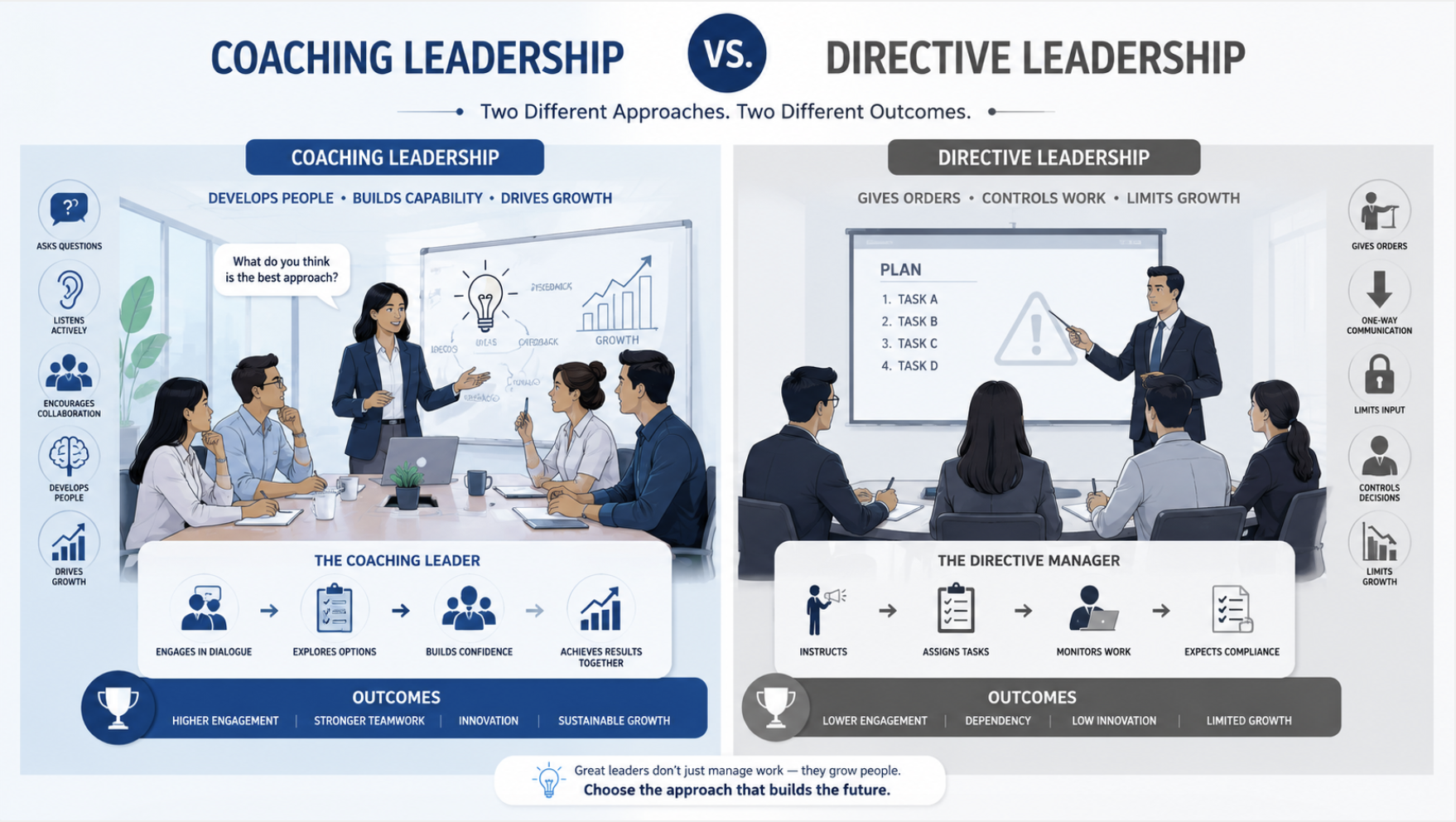
Coaching leadership and directive leadership both help teams achieve results, but they differ in how leaders develop people and guide performance. Choosing the right approach depends on the situation, the team’s experience, and the level of direction required.
Coaching Leadership
A coaching leader typically:
- Asks thoughtful questions before offering solutions.
- Encourages employees to think critically and solve problems independently.
- Focuses on long-term development and continuous improvement.
- Uses feedback and reflection to support learning.
- Builds ownership and accountability.
This approach is most effective when developing future leaders, improving performance, or helping employees strengthen their decision-making skills.
Directive Leadership
A directive leader typically:
- Provides clear instructions and expectations.
- Makes decisions quickly when immediate action is required.
- Defines specific tasks, priorities, and responsibilities.
- Provides close guidance to ensure consistent execution and timely results.
Directive leadership is most appropriate during emergencies, situations involving safety, or when employees need immediate guidance while learning unfamiliar tasks.
Effective leaders know when to coach and when to provide direct instruction. They adapt their leadership style to the situation while developing capable, accountable teams that can perform with greater independence over time.
Signs a Coaching Approach Would Help Your Team
A coaching leadership style is most effective when employees need more ownership and leaders need to spend less time directing daily work. Your team may benefit from a coaching approach if you notice these signs:
- The owner or manager is the bottleneck. If routine decisions always require approval from one person, work slows and managers have less time to focus on strategic priorities. Coaching leadership helps employees develop the judgment to make appropriate decisions within their responsibilities.
- Employees rarely take initiative. When employees wait for instructions instead of solving problems, they become dependent on managers for direction. Coaching leadership encourages critical thinking, strengthens decision-making, and builds greater ownership.
- High turnover or low engagement. Employees are more likely to stay engaged when they receive regular feedback, opportunities to develop new skills, and increasing responsibility. Coaching leadership supports professional growth while maintaining clear expectations and accountability.
- Leaders spend too much time solving everyday problems. Managers who constantly answer routine questions or resolve recurring issues often limit their ability to focus on planning, strategy, and leadership development. Coaching leadership transfers knowledge and responsibility to employees, allowing leaders to focus on higher-value priorities.
Core Skills of a Coaching Leader
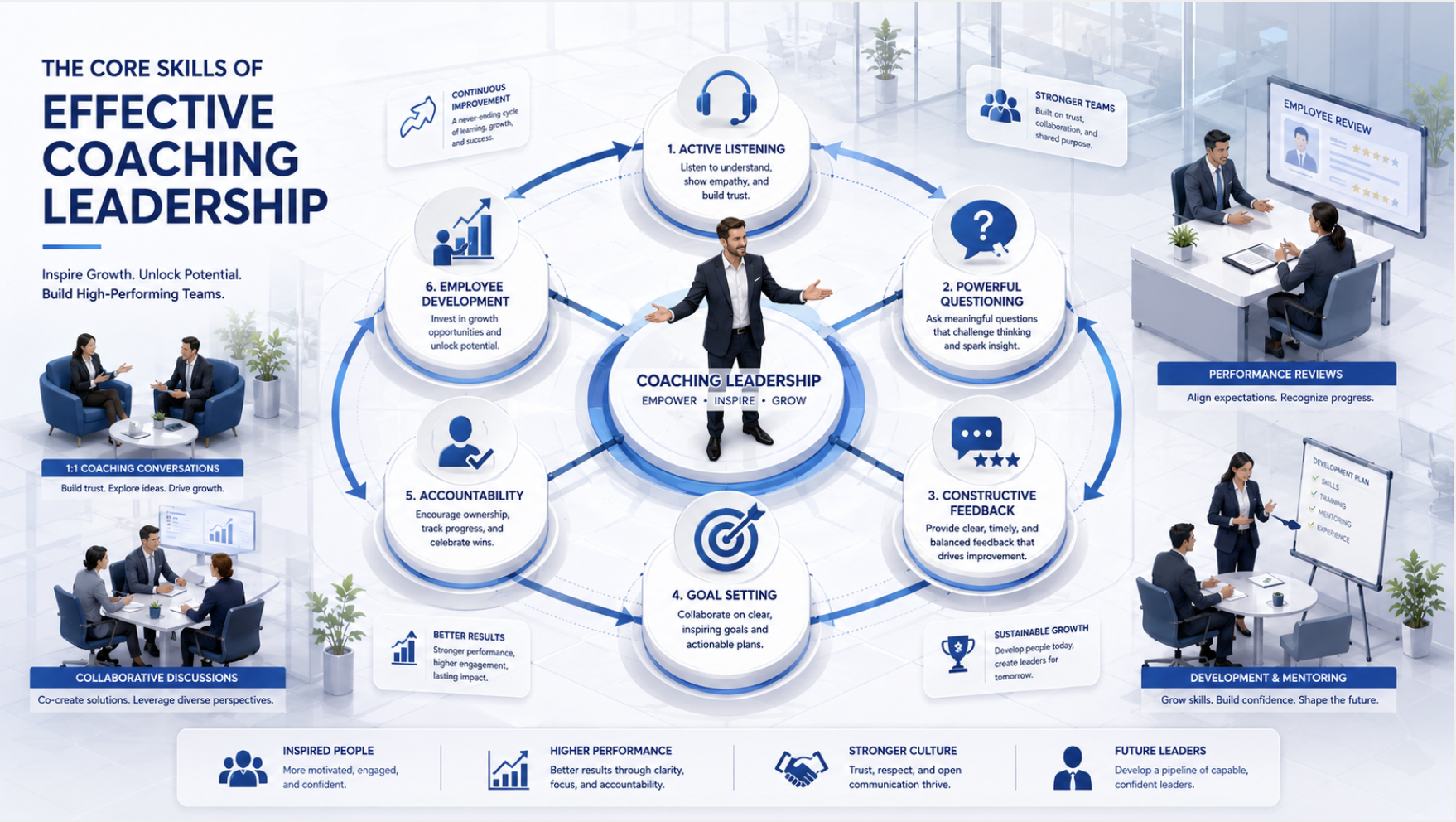
Developing a coaching leadership style requires consistent practice. Effective coaching leaders rely on a core set of skills to develop employees, strengthen decision-making, and build accountability without creating dependence on the leader.
Active Listening
Coaching begins with listening to understand before responding. Effective coaching leaders give employees their full attention, ask clarifying questions, and seek to understand the situation before offering guidance. Active listening builds trust and helps leaders provide feedback that addresses the underlying issue instead of only the immediate problem.
Asking Powerful Questions
Instead of providing immediate answers, coaching leaders ask questions that encourage employees to reflect and develop their own solutions. Effective questions help employees:
- Think critically.
- Evaluate different options.
- Consider the potential outcomes of their decisions.
- Build confidence in their own judgment.
The goal is to develop independent thinking and encourage employees to take ownership of their decisions rather than rely on managers for every answer.
Constructive Feedback
Constructive feedback should be specific, timely, and focused on improvement. Coaching leaders recognize strengths, identify opportunities for growth, and provide practical guidance employees can apply in future situations. Effective feedback helps employees improve performance while maintaining accountability.
Accountability Without Micromanagement
Coaching leadership does not mean lowering expectations or reducing oversight. Effective leaders establish clear expectations, define desired outcomes, and follow up consistently without directing every step of the work. Employees maintain ownership of their responsibilities while remaining accountable for results.
This balance helps employees build confidence, strengthens accountability, and allows leaders to delegate more effectively as their teams develop.
Common Mistakes When Adopting a Coaching Style
Adopting a coaching leadership style requires consistent leadership behaviors. Without clear expectations, regular follow-up, and a structured coaching process, employees are less likely to develop the confidence and decision-making skills that coaching is designed to build.
Becoming Too Hands-Off
Coaching leadership does not mean giving employees complete independence. Leaders should set clear expectations, define responsibilities, and schedule regular one-on-one conversations to review progress. Employees should have the freedom to make decisions within their role while knowing their leader is available for guidance and feedback.
Failing to Follow Through
A coaching conversation should lead to clear next steps. Leaders should follow up on agreed actions, review progress, and discuss challenges during future coaching conversations. Consistent follow-through reinforces accountability and helps employees apply what they have learned to their daily work.
Coaching Without Structure
Effective coaching follows a consistent process. Coaching conversations should connect to specific performance expectations, individual development goals, and measurable outcomes. A structured approach gives employees a clear understanding of what they are working toward and how their progress will be evaluated.
Solving Problems Instead of Developing Problem Solvers
Experienced leaders often have the knowledge to solve problems quickly. However, providing immediate answers can reduce opportunities for employees to strengthen their own decision-making skills. Coaching leaders ask questions, encourage employees to evaluate their options, and guide them toward practical solutions before stepping in with direct answers.
How Leaders Build This Skill
Developing a coaching leadership style requires consistent practice, regular feedback, and a structured approach to leadership development. Reading about leadership coaching provides a foundation, but leaders build coaching skills by applying them during everyday conversations with their teams.
Leaders strengthen their coaching skills by:
- Practicing active listening during one-on-one conversations.
- Asking questions that help employees evaluate options and develop their own solutions.
- Following a consistent coaching framework during performance and development discussions.
- Seeking feedback from managers, peers, or mentors to identify opportunities for improvement.
- Reviewing employee progress and adjusting coaching conversations based on individual development needs.
Consistent practice helps coaching behaviors become part of everyday leadership. Over time, leaders become more effective at developing employee decision-making, delegating responsibility, and building accountability across their teams.
Organizations that want to develop coaching leaders at every level often use a structured leadership development program. Formal training provides leaders with proven coaching frameworks, guided practice, and feedback that helps them apply coaching techniques consistently across different leadership situations. Learn more about Trifecta Growth Institute’s Leadership Development Program.
Leaders can continue strengthening these skills through ongoing leadership coaching. Regular coaching sessions provide opportunities to discuss leadership challenges, receive feedback, and refine coaching techniques with the support of an experienced coach. Explore Trifecta Growth Institute’s Leadership Coaching services.
Frequently Asked Questions
Is coaching leadership the same as mentoring?
No. Coaching leadership develops employee performance through questions, feedback, and accountability within their current role. Mentoring focuses on sharing experience and supporting long-term career development.
Can a coaching leadership style work in a fast-paced, high-pressure environment?
Yes. Leaders may need to use a more directive approach during urgent situations. Coaching leadership remains effective during planning, performance discussions, and employee development because it strengthens decision-making before high-pressure situations occur.
What personality types struggle most with a coaching leadership style?
Leaders who prefer making every decision or providing immediate answers may find coaching more challenging. Coaching leadership requires leaders to ask questions, encourage problem-solving, and give employees appropriate ownership.
How long does it take to develop coaching leadership skills?
There is no fixed timeline. Leaders develop coaching leadership skills through consistent practice, regular feedback, and structured leadership development.
Does coaching leadership work for new managers or only experienced leaders?
Coaching leadership benefits both. New managers can develop effective coaching habits early, while experienced leaders can strengthen employee development, delegation, and accountability.
Talk with a Leadership Advisor
Great leaders don’t create dependence. They develop people who can think, decide, and lead with confidence.
If you’re ready to strengthen the coaching leadership style across your leadership team, talk with a Leadership Advisor at Trifecta Growth Institute. Learn how our leadership development programs and leadership coaching help leaders build stronger coaching skills through practical frameworks, consistent feedback, and structured development.