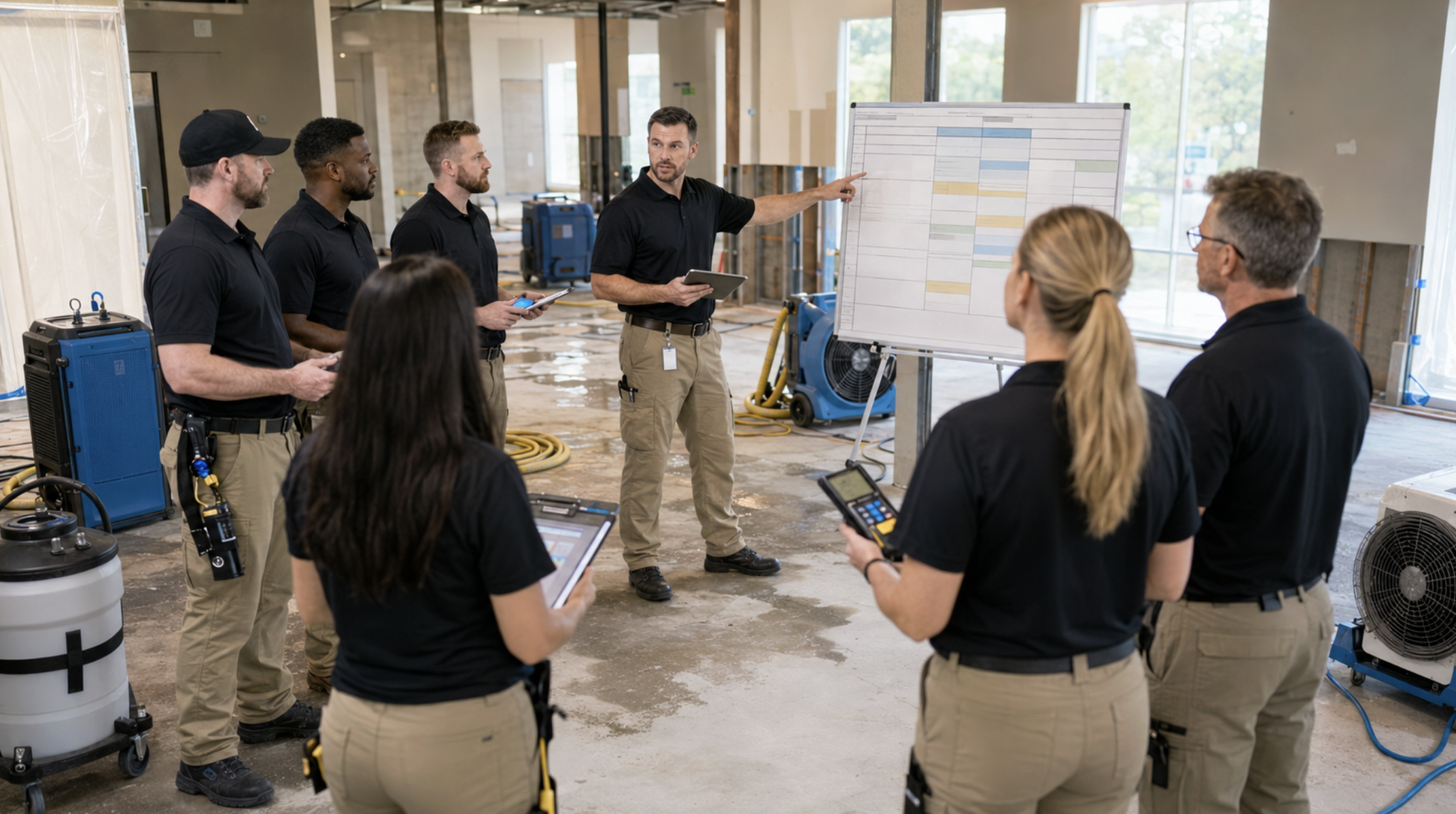
Most restoration companies promote their best technicians into leadership roles, then wonder why projects start slipping. Technical skill and leadership skill are not the same thing, and without structured leadership development, even your strongest performers struggle to lead a crew, manage client relationships, or hold a job site accountable.
Leadership development closes that gap. It is not a single training event. It is an ongoing process that builds the judgment, communication, and accountability systems that keep projects moving without constant owner involvement.
As technicians move into leadership roles, they must learn how to delegate work, make sound decisions, address problems early, and keep crews aligned throughout a project. Those skills are developed through consistent practice, feedback, and accountability rather than experience alone.
Here is what changes when restoration teams invest in leadership development and what the process actually looks like in the field.
In restoration, leadership development is the difference between promoting a skilled technician and preparing them to lead a crew. Technical expertise does not automatically prepare someone to communicate clearly, delegate responsibilities, make job site decisions, or hold crew members accountable.
An undeveloped leader often continues doing the work instead of leading it. They solve every problem themselves, step in to complete unfinished tasks, and call the owner whenever a job becomes more complex. Over time, that creates owner bottlenecks instead of developing independent leaders.
A developed leader sets clear expectations before work begins, delegates responsibilities, checks progress throughout the project, and only escalates issues that genuinely require owner involvement. They focus on leading the crew instead of completing every task themselves.
That shift from doing the work to leading the work is the purpose of a structured leadership development program. Instead of relying on trial and error, emerging leaders build stronger communication, accountability, delegation, decision-making, and leadership skills development through practical application and ongoing development.
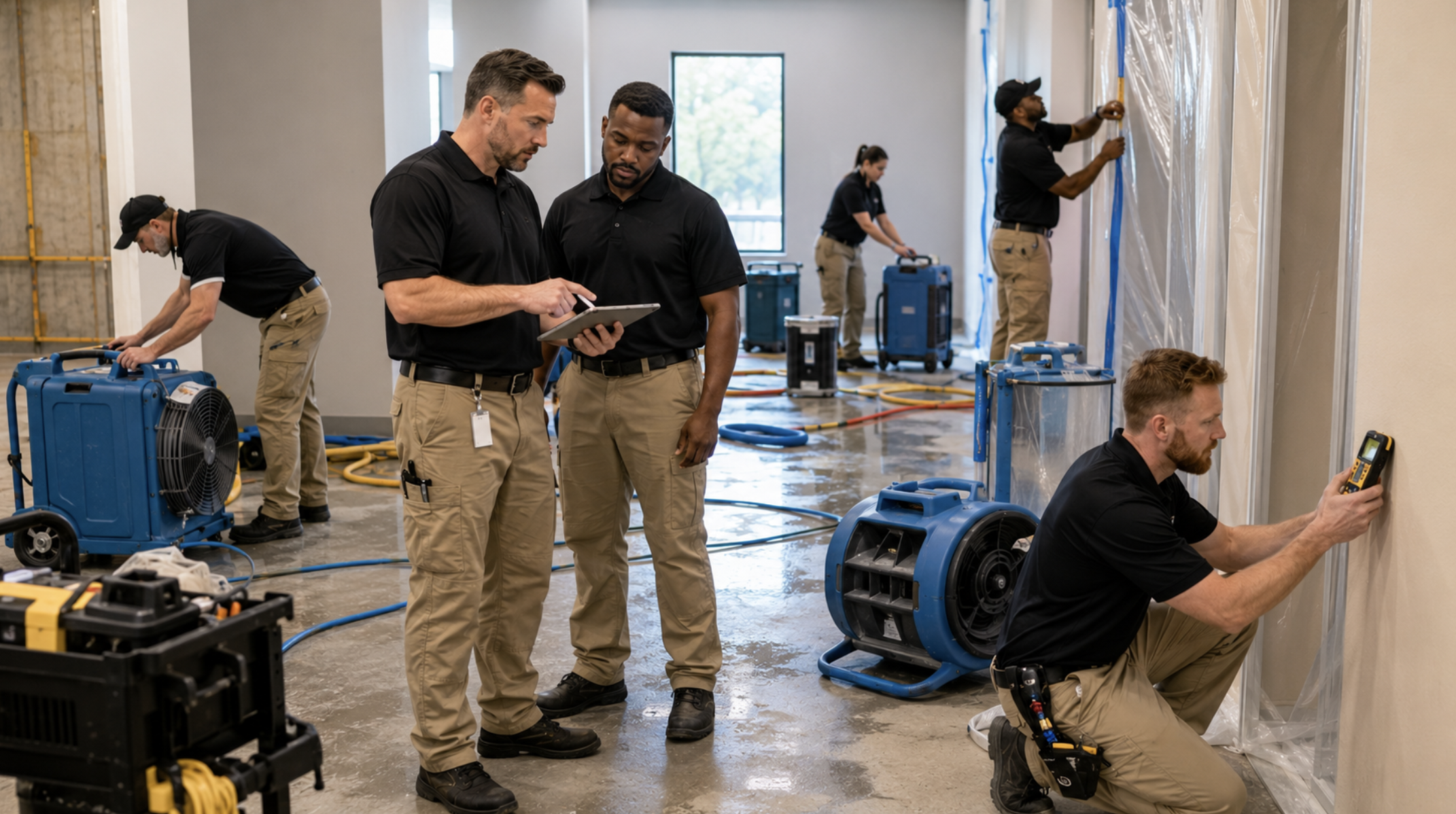
Accountability does not come from telling people to “be more accountable.” It comes from leaders who set clear expectations, follow through consistently, and address problems the day they happen. Those behaviors are developed through leadership development training, not assumed after a promotion.
On a restoration project, unclear expectations and inconsistent communication often lead to avoidable problems, such as:
A structured leadership development program teaches leaders how to prevent those issues by:
These daily leadership habits strengthen accountability across the crew while reducing unnecessary owner involvement. As leaders communicate consistently and reinforce expectations, team members develop greater ownership of their responsibilities and make better day-to-day decisions within their roles.
That is the direct connection between leadership training and development and stronger operational performance. Restoration companies benefit from fewer surprises, fewer callbacks, and fewer late-night calls because accountability becomes part of how the team operates every day. It also gives owners more time to support their restoration project managers, strengthen operations, and focus on business growth.
Leadership gaps rarely appear as one major problem. They show up in the daily operational issues that slow projects, increase costs, and keep owners involved in work their supervisors should be managing.
Common signs include:
These are not isolated operational issues. They are signs of leadership gaps. Effective leadership development strategies prepare supervisors to communicate clearly, make informed decisions, and take ownership of project execution before issues reach the owner’s desk. As leadership improves, restoration companies reduce callbacks, strengthen accountability, and give owners more time to improve operations and support their restoration project managers.
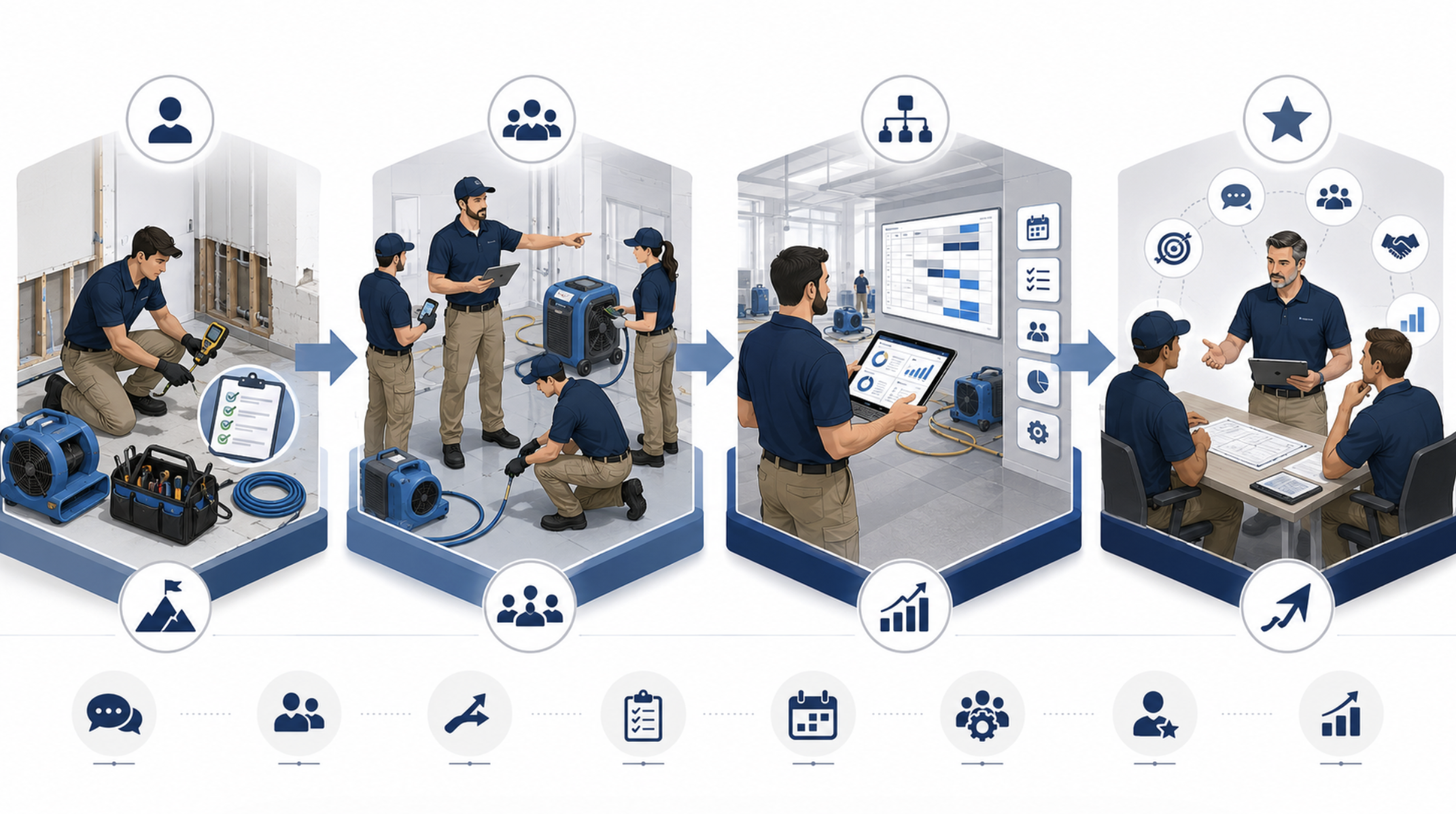
A successful leadership development program is more than a series of workshops or online courses. It is a structured progression that prepares leaders for greater responsibility as their roles expand. Instead of expecting someone to become an effective leader overnight, each stage builds the skills needed for the next level of leadership.
Stage 1: Managing Your Own Work
Leadership starts with personal accountability. Before leading a crew, employees must consistently manage their own responsibilities, follow established processes, communicate proactively, and take ownership of their work. This foundation supports every leadership development plan.
Stage 2: Managing a Crew
As responsibilities grow, leaders shift from completing the work to leading the crew. This stage of leadership development training focuses on delegation, setting clear expectations, providing feedback, and coaching team members instead of solving every problem themselves.
Stage 3: Managing Job Outcomes
Leadership expands beyond supervising people to managing project outcomes. Leaders coordinate schedules, monitor project progress, handle difficult conversations, make informed job site decisions, and maintain financial accountability while reducing unnecessary owner involvement.
Stage 4: Managing Other Leaders
As organizations grow, experienced leaders develop future leaders. They coach supervisors, reinforce consistent leadership expectations, strengthen accountability, and build the leadership capacity needed to support long-term business growth.
Progress should be measured by demonstrated leadership behaviors rather than attendance alone. Observable indicators include:
An effective leadership development program combines coaching, practical application, and ongoing feedback so leaders consistently apply these skills in the field instead of simply completing training.
Employee retention is not simply an HR metric. In restoration businesses, it is a direct outcome of leadership development. Leaders who receive clear expectations, coaching, and ongoing support are better equipped to provide the same structure for their teams.
A structured leadership development program helps supervisors build loyalty by:
That investment directly affects retention. Every experienced employee who leaves creates measurable business costs, including:
Investing in leadership skills development helps leaders retain skilled employees by creating a workplace built on accountability, consistent communication, and continued development. For restoration companies, retention is not simply a people issue. It is a measurable operational cost that affects productivity, project continuity, and long-term business growth.
The terms leadership training and leadership development are often used interchangeably, but they are not the same. Understanding the difference helps restoration business owners invest in solutions that create lasting operational improvements instead of short-term learning.
Leadership training is typically a one-time event that builds knowledge. It may introduce communication, delegation, or conflict resolution skills through a workshop, seminar, or online course. While valuable, training alone does not change day-to-day leadership behavior.
Leadership development is an ongoing process that combines learning with coaching, practical application, feedback, and accountability. The goal is not simply attending training but consistently applying leadership skills on the job.
| Leadership Training | Leadership Development |
|---|---|
| One-time event | Ongoing process |
| Builds awareness | Builds behavior |
| Focuses on knowledge | Focuses on accountability and application |
| Short-term learning | Long-term leadership growth |
In restoration, the difference becomes clear on the job site. A supervisor may understand delegation after attending a workshop, but consistently delegating, handling difficult conversations, communicating with customers, and maintaining financial accountability require practice, coaching, and feedback over time.
This is why an effective leadership development program goes beyond one-time instruction. It reinforces new behaviors through ongoing coaching and practical application, helping leaders make better decisions, strengthen team accountability, and deliver more consistent project outcomes.
If you’ve recognized your business in the examples throughout this article, don’t start by choosing a course. Start by identifying where your leadership gaps actually exist. Before investing in a leadership development program, evaluate how your supervisors lead their teams every day.
Ask yourself:
These questions help determine whether the challenge is technical capability or leadership execution.
A team assessment can provide that clarity before investing in leadership development. Trifecta’s Leadership Insights Package includes a Kolbe-based team assessment that helps identify leadership strengths, communication styles, and development opportunities. The results provide a foundation for a leadership development plan that aligns with your team’s needs instead of relying on a one-size-fits-all approach.
From there, you can implement a structured leadership development program that equips supervisors to lead crews, manage project outcomes, and develop future leaders through ongoing coaching, accountability, and practical application.
What is leadership development?
Leadership development is a structured, ongoing process of building leadership skills, mindset, and accountability over time. Unlike a one-time training event, it progresses from managing your own work to leading crews, managing project outcomes, and eventually managing other leaders.
How does leadership development improve team performance?
Leadership development improves team performance by helping leaders set clear expectations, hold crews accountable, and make informed decisions without constant owner involvement. That leads to fewer callbacks, fewer missed deadlines, and more consistent project outcomes.
Why does leadership development matter in restoration specifically?
Restoration projects are fast-moving, insurance-driven, and high-stakes. Poor leadership can quickly lead to costly callbacks, confused crews, missed deadlines, and client communication issues. Leadership development prepares supervisors to lead confidently and keep projects moving with greater accountability.
How long does leadership development take?
Meaningful behavior change happens over weeks or months of structured practice, coaching, and feedback, not a single workshop. A structured leadership development program builds lasting leadership behaviors through ongoing application and accountability.
What is the difference between leadership training and leadership development?
Leadership training is a one-time event that builds knowledge. Leadership development is an ongoing process that builds leadership behaviors and judgment through coaching, practice, feedback, and accountability. Training introduces concepts, while development helps leaders apply them consistently on the job.
 Leadership Training Topics for Project and Operations Managers
 Leadership Development Tools: What Gets Used and What Gets Ignored
 How to Build a Leadership Development Plan for Operations and Project Managers
 Frontline Leadership Training: What It Is and What It Should Cover
 Leadership Communication Training: Building the Skills That Drive Results
 Leadership Assessment: Why It’s the First Step to Stronger Leaders
 Coaching Leadership Style: What It Is and How It Drives Team Performance
 Restoration Project Manager Salary: What to Expect and How to Advance
 Restoration Project Manager Certification: What It Is and How to Get Certified
 Leadership Development Programs: Building Stronger Leaders for Long-Term Success