Introduction
A leadership development plan should guide how an operations or project manager builds the skills needed for greater responsibility. Too often, it becomes another file created during a review, saved in a folder, and never opened again.
The problem is rarely a lack of ambition. Operations and project managers often know they need clearer communication, stronger delegation, and more confidence when leading teams. What they lack is a practical structure that turns broad intentions into specific goals, actions, timelines, and measures of progress.
This guide shows that structure through a completed plan for an operations manager moving into leadership and another for a project manager leading a team for the first time. Both are designed to be used, reviewed, and revised as responsibilities change.

What a Leadership Development Plan Actually Is (and What It Is Not)
A leadership development plan is a structured roadmap for preparing a manager to take on greater leadership responsibility. It connects business needs with individual growth by defining the skills to develop, the actions and support required, and the measures used to track progress.
A strong plan focuses on future capability, not just current performance. It prepares a manager for broader responsibility instead of restating the work they already perform.
| Leadership Development Plan | Not a Leadership Development Plan |
|---|---|
| Builds long-term leadership skills | Lists daily job duties |
| Includes measurable growth goals | Only measures productivity |
| Uses coaching and feedback | Relies on a once-a-year review |
| Evolves as responsibilities grow | Stays unchanged after it’s written |
A plan does not develop a leader on its own. It creates the structure for consistent practice, coaching, feedback, and adjustment so development stays intentional.
Why Most Leadership Development Plans Fail
Most organizations don’t struggle because they lack templates. They struggle because they mistake documentation for development.
Here are the three most common reasons plans lose momentum.
They focus on personality instead of behavior
“Become more confident” sounds meaningful, but it isn’t measurable. Effective plans translate broad qualities into observable behaviors such as:
- Leading weekly team meetings independently
- Delivering project updates clearly to stakeholders
- Delegating work without constant follow-up
- Resolving team conflicts using a consistent process
Behavior changes can be practiced, observed, and improved. If the change cannot be observed, it cannot be coached consistently.
They’re disconnected from real work
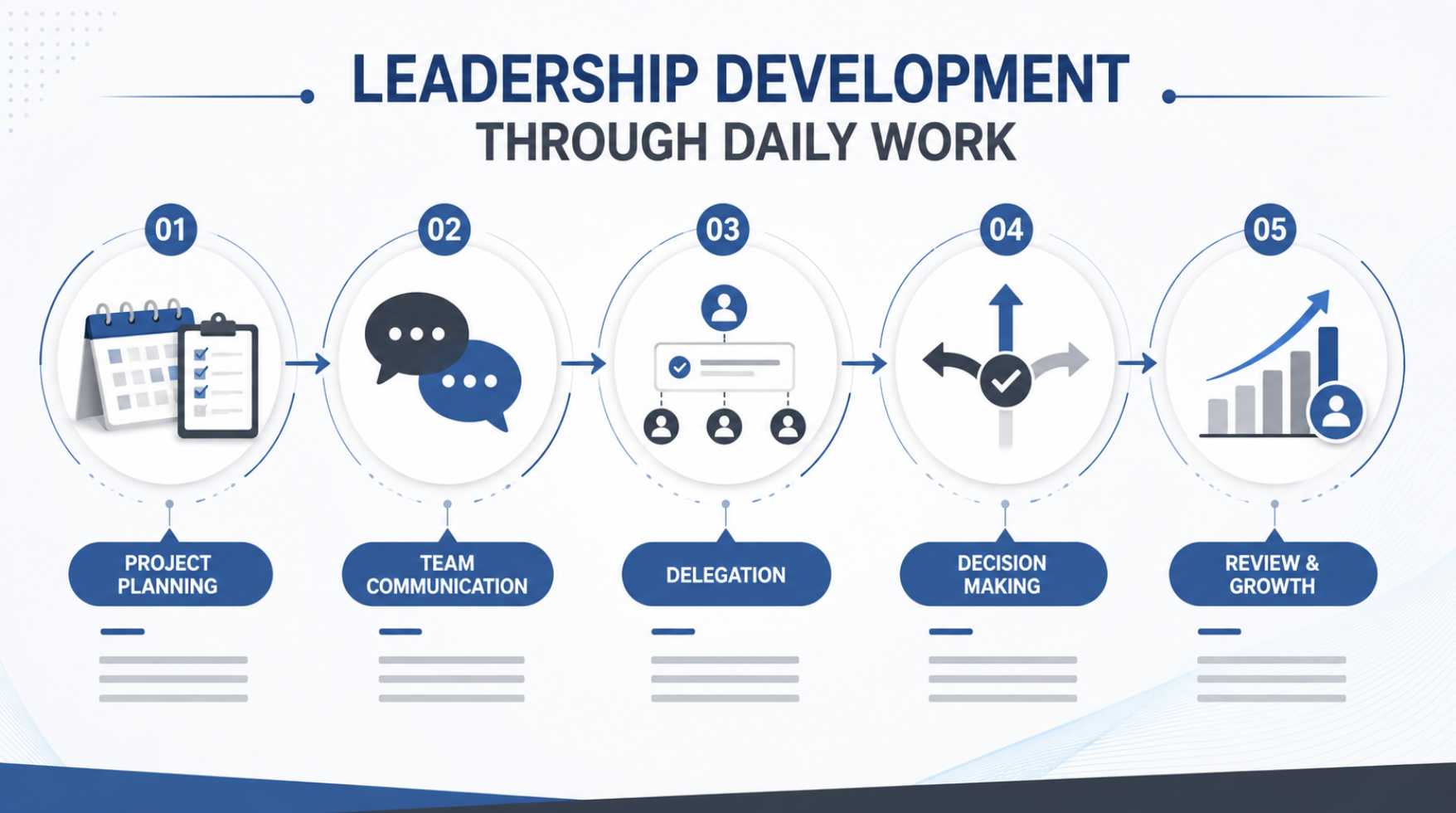
Leadership grows during projects, client conversations, scheduling challenges, and difficult decisions, not in isolation. Development activities should align with the employee’s actual responsibilities instead of existing as separate training exercises. Training can support the plan, but day-to-day work is where the new behavior has to show up.
Nobody owns the review process
A great plan without regular reviews quickly becomes outdated. Progress requires accountability from both the employee and their manager through scheduled conversations, documented feedback, and updated priorities. The plan should name the review owner, set the cadence, and define what evidence will be discussed.
A leadership development plan stays useful when it changes behavior on the job, has a clear owner, and remains active through regular review.
The Five Components Every Leadership Development Plan Needs
You don’t need a 15-page document. A useful plan is simple enough to review, apply, and update.
1. Leadership objective
Define the leadership responsibility the manager is preparing to take on.
Example:
Transition from managing projects to leading multiple teams and developing future supervisors.
The objective provides direction for every other section of the plan.
2. Priority leadership skills
Choose three to five skills instead of trying to improve everything at once.
For operations and project managers, common priorities include:
- Communication
- Delegation
- Decision-making
- Coaching team members
- Strategic planning
Fewer priorities create better focus.
3. Practical development activities
Development should happen through real work, supported by training and feedback.
Examples include:
- Leading recurring operational meetings
- Shadowing senior leadership during planning sessions
- Coaching a junior employee
- Presenting monthly performance updates
- Completing targeted microlearning modules
Each activity should create repeated practice, because capability develops through use.
4. Milestones and timeline
Every goal needs a realistic timeframe with clear checkpoints.
Instead of:
Improve delegation.
Write:
| Timeline | Milestone |
|---|---|
| Month 1 | Delegate one recurring responsibility |
| Month 2 | Conduct weekly accountability check-ins |
| Month 3 | Team completes delegated work independently |
Specific milestones make progress visible.
5. Success measures
Leadership is measurable when expectations are clear. Each measure should identify the behavior, the evidence, and the expected level of performance.
Examples include:
- Team meetings led on schedule with documented action items
- Project updates delivered clearly and on time
- Reduced need for senior intervention
- Documented coaching conversations and follow-up actions
- Successful completion of leadership responsibilities during live projects
Measure behaviors, not personality.
Worked Example: An Operations Manager Moving Into a Leadership Role
The example below shows how to turn a broad promotion goal into specific behaviors, milestones, and evidence of progress.
Employee profile
| Current role | Operations Manager | Development goal | Lead multiple departments and mentor supervisors | Plan duration | 6 months | Review cadence | Monthly | Plan owner | Operations manager and direct supervisor |
Leadership objective
Within six months, the operations manager will lead cross-department operations meetings, delegate recurring responsibilities to supervisors, coach two supervisors, and present one process improvement proposal.
Development priorities
- Delegation: Shift recurring operational tasks to supervisors while maintaining clear expectations and accountability.
- Leadership communication: Lead meetings with clear agendas, decisions, and follow-up actions.
- Coaching: Develop supervisors through regular one-on-one conversations and documented next steps.
- Process improvement: Identify recurring operational bottlenecks and recommend structured solutions.
Six-month development roadmap
Monthly milestones
| Month | Development Activity | Evidence of Progress |
|---|---|---|
| 1 | Delegate recurring operational reports | Reports completed accurately and on time without manager intervention |
| 2 | Lead weekly operations meetings | Agendas shared in advance, with decisions and action items documented |
| 3 | Coach two supervisors | Monthly coaching conversations and follow-up actions documented |
| 4 | Present one process improvement proposal | Leadership feedback incorporated |
| 5 | Lead a cross-functional planning meeting | Department leaders agree on priorities, owners, and deadlines |
| 6 | Complete a six-month leadership review | Progress documented and new development goals established |
How progress gets measured
Progress is measured through observable behavior and documented work, not vague impressions. The operations manager and direct supervisor review the following evidence each month:
- Meetings end with documented decisions, owners, and deadlines.
- Supervisors resolve routine issues within their authority without manager intervention.
- Operational updates reach affected departments clearly and on time.
- An approved process improvement moves into implementation with an owner and timeline.
This creates accountability without becoming overly complicated.
For managers who need structured training, coaching, and feedback, Trifecta’s Leadership Mastery Program can support the practical work defined in the plan.
Worked Example: A Project Manager Leading a Team for the First Time
Project managers often excel at delivering work before they’re asked to lead people. The transition requires skills that project delivery alone does not build.
Employee profile
| Current role | Project Manager | Development goal | Lead a project team with clear communication, delegation, and accountability | Plan duration | 90 days | Review cadence | Days 30, 60, and 90 | Plan owner | Project manager and direct supervisor | Primary focus | People leadership |
Leadership goals
| Goal | Development Activity | Evidence of Progress |
|---|---|---|
| Improve communication | Lead daily project briefings | Briefings occur on schedule, with decisions and action items documented |
| Delegate effectively | Assign outcomes, decision authority, and deadlines | Team members complete assigned responsibilities with fewer follow-ups |
| Build accountability | Hold weekly one-on-one check-ins | Commitments and follow-up dates are documented |
| Resolve conflict | Practice structured feedback conversations | Feedback conversations produce clear next steps |
90-day action plan
Days 1–30: Build consistency
- Lead every project kickoff meeting.
- Create standardized communication updates.
- Observe a senior leader during difficult conversations.
Days 31–60: Develop coaching habits
- Conduct weekly one-on-ones with team members.
- Delegate planning responsibilities to emerging leaders.
- Document recurring leadership challenges.
Days 61–90: Lead independently
- Facilitate project reviews without senior support.
- Coach one team member toward greater responsibility.
- Complete a leadership reflection and identify next-stage goals.
The objective isn’t perfection. It’s creating repeatable leadership habits that improve with every project.
How to Review the Plan So It Doesn’t Go Stale
A leadership development plan stays useful when it is reviewed and adjusted. The review process matters as much as the original plan.
Monthly check-ins
Once each month, review three questions:
- Which leadership behaviors improved?
- Which development activities were completed?
- What obstacle slowed progress?
Keep these conversations focused on growth rather than evaluation.
Quarterly revisions
Every three months, update the plan based on changing responsibilities.
Triggers for revision include:
- Promotion into a larger role
- New leadership responsibilities
- Organizational changes
- Completion of major development milestones
Revise the plan when the role, business priorities, or evidence shows that the current goals no longer fit.
Shared ownership
A useful plan has two owners: the employee and the manager.
| Employee Owns | Manager Owns |
|---|---|
| Completing development activities | Providing coaching |
| Reflecting on progress | Giving timely feedback |
| Identifying challenges | Removing barriers |
| Practicing new skills | Reviewing evidence of leadership growth |
The employee does the work. The manager provides the structure, feedback, and accountability that keep the plan active.
The right leadership development tools can support that partnership when they reinforce real work, feedback, and accountability.
Where a Formal Leadership Program Fits
A leadership development plan provides direction. A structured leadership program provides the framework to execute it consistently.
As leaders take on greater responsibility, they often need more than motivation. They need repeatable systems, coaching support, and practical implementation that connects directly to their daily work.
Structured learning is useful when it turns the plan into repeated practice. Guided application, coaching, and accountability help managers build consistent habits instead of collecting disconnected leadership ideas.
The right leadership training topics can turn those development priorities into a focused curriculum for project and operations managers.
Whether someone is leading operations, managing projects, or preparing for senior leadership, the goal remains the same: build people who can build stronger businesses.
Trifecta’s Leadership Mastery Program combines structured learning, coaching, and practical application for managers who are ready to carry out a development plan in real work.
Frequently Asked Questions
What should be included in a leadership development plan?
A leadership development plan should include a clear leadership objective, three to five priority skills, practical development activities, a timeline with measurable milestones, defined success measures, and a review cadence with clear ownership. It should prepare someone for future leadership responsibility rather than rate current job performance.
How long should a leadership development plan cover?
A leadership development plan commonly covers 90 days to 12 months, depending on the role and development goals. A 90-day plan can help a first-time leader build foundational habits, while a plan lasting six to 12 months gives an operations or project manager time to practice broader responsibilities and demonstrate progress.
What is the difference between a development plan and a performance plan?
A development plan focuses on future growth by building leadership skills and preparing someone for greater responsibility. A performance plan focuses on meeting current role expectations and improving existing job performance.
Who is responsible for writing the plan, the manager or the employee?
The manager and employee should write the leadership development plan together. The employee contributes career goals and self-reflection, while the manager provides coaching, feedback, and alignment with business priorities. Both share responsibility for reviewing the plan, documenting progress, and updating goals.
How do you measure whether a leadership development plan is working?
Measure observable leadership behaviors and documented results rather than personality traits. Evidence can include delegated work completed without repeated intervention, project updates delivered clearly and on time, coaching conversations with documented follow-up, and broader responsibilities completed with less senior support.
What are examples of leadership development goals?
Examples include delegating recurring responsibilities with clear authority, leading meetings with documented decisions and action items, coaching team members through regular one-on-one conversations, making timely decisions within defined authority, addressing conflict through a consistent feedback process, and creating repeatable communication systems across teams.
Ready to Put Your Leadership Development Plan Into Practice?
A plan needs more than leadership theory. It needs structured practice that connects daily work with measurable progress.
Explore Trifecta Growth Institute’s Leadership Mastery Program for coaching, repeatable frameworks, and practical application that support operations and project managers as they develop stronger leadership habits.