Communication shapes execution. Clear expectations help teams move work forward. Unclear communication leads to delays, rework, and unnecessary oversight.
Leadership communication is not a personality trait or a natural talent. It is a practical leadership skill that can be developed through structured leadership communication training.
Effective leadership communication training helps managers communicate expectations clearly, deliver constructive feedback, lead difficult conversations, and create consistent communication across teams. These skills reduce misunderstandings, strengthen accountability, and help leaders guide execution without becoming the bottleneck.
For growing businesses, stronger communication helps close the leadership execution gap by giving managers the skills to lead with greater clarity and consistency.
Why Communication Breakdowns Happen in Growing Businesses
As businesses grow, leadership communication becomes more important. Informal conversations and quick updates are no longer enough to keep teams aligned. Without clear communication practices, execution becomes inconsistent.
Clear communication keeps work moving. Inconsistent communication creates execution gaps that slow progress and require unnecessary oversight.
Unclear Expectations
Leaders sometimes assume their expectations are understood. Team members may interpret priorities differently or lack the context needed to complete work as expected. When communication expectations are unclear, teams spend more time revising work, clarifying priorities, and responding to missed expectations.
Inconsistent Messaging
Managers should communicate priorities, responsibilities, and performance expectations consistently across teams. When messages differ between departments or leaders, employees receive conflicting directions. This can delay decisions, create inconsistent execution, and make accountability more difficult.
Lack of Feedback Loops
Leadership communication is not limited to giving direction. It also requires regular feedback and two-way communication. Without consistent feedback loops, misunderstandings can go unnoticed until they affect project execution, cross-functional collaboration, or team performance.
Many growing businesses invest in leadership communication training because it helps managers establish consistent communication practices that support better execution as teams expand.
What Leadership Communication Training Actually Covers
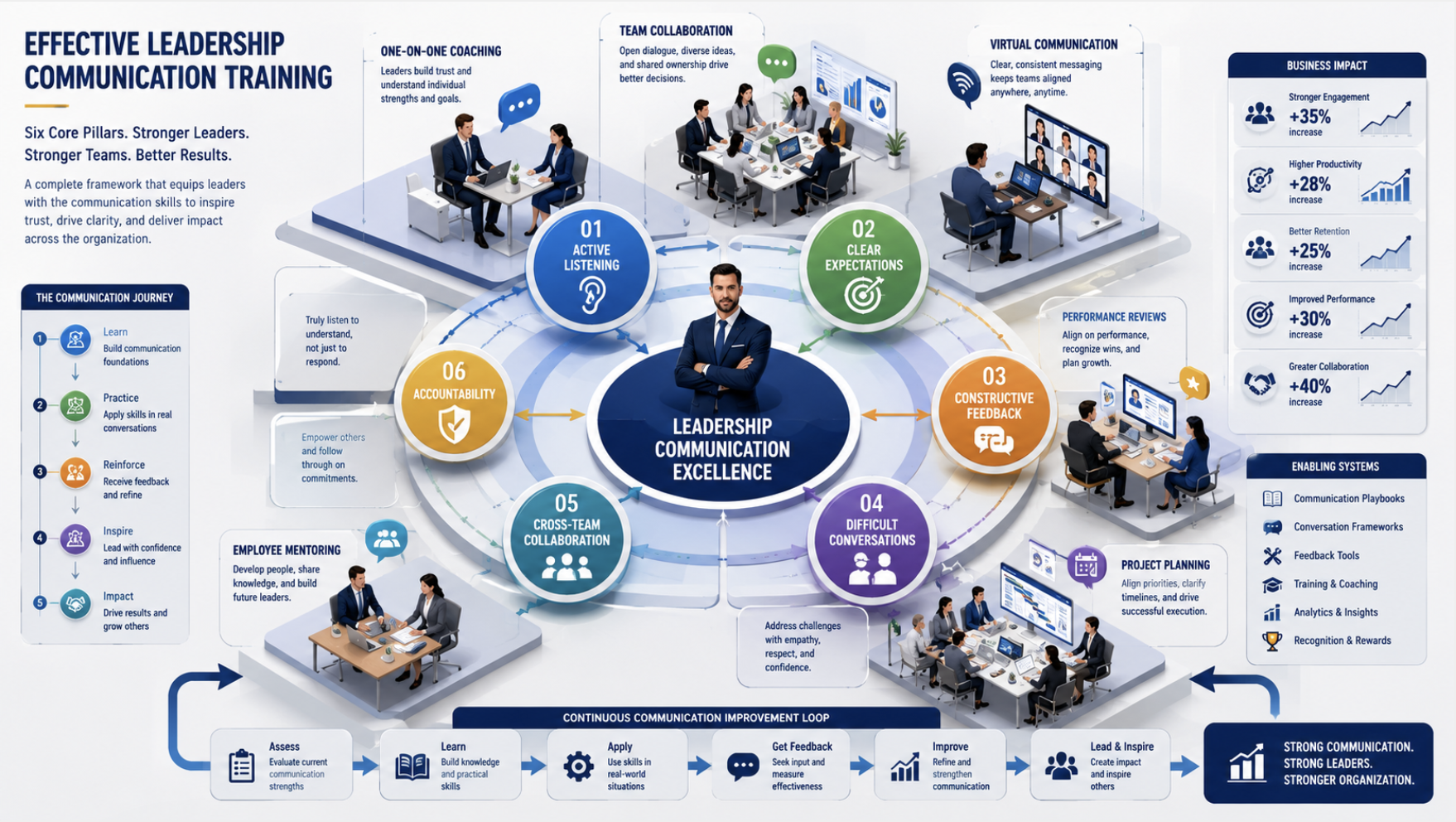
Many people associate leadership communication training with public speaking or presentation skills. While those skills can be valuable, effective leadership communication training focuses on how leaders communicate every day. It helps managers set clear expectations, deliver feedback, navigate difficult conversations, and improve team execution.
Setting Clear Direction
Leaders learn how to communicate goals, priorities, responsibilities, and performance expectations with clarity. Clear direction reduces confusion, supports better decision-making, and helps teams execute work without unnecessary clarification.
Active Listening
Leadership communication is a two-way process. Active listening helps leaders understand concerns, clarify expectations, and identify obstacles before they affect execution. It also creates more productive coaching conversations and improves team alignment.
Delivering Constructive Feedback
Constructive feedback should be timely, specific, and actionable. Leadership communication training helps managers reinforce accountability, address performance issues, and guide improvement through clear, respectful conversations.
Managing Difficult Conversations
Every leader faces conversations about performance, workplace conflict, or changing expectations. Avoiding these discussions often allows problems to grow. Leadership communication training equips managers with practical strategies to address difficult conversations with clarity, professionalism, and confidence.
Strong communication creates consistent execution. When managers communicate with clarity, teams spend less time seeking direction and more time delivering results.
To strengthen these communication skills, explore Trifecta’s Mastering Leadership Presence program, which helps leaders communicate with greater clarity and confidence.

Signs Your Leadership Team Needs Communication Training
Communication breakdowns often develop gradually as businesses grow. Managers may not recognize the impact until communication gaps begin affecting execution, team alignment, and day-to-day operations. Leadership communication training helps leaders identify these patterns early and build communication practices that keep work moving forward.
Repeated Misunderstandings
When employees regularly misunderstand project priorities, responsibilities, or performance expectations, communication is often the underlying issue. Frequent clarification, repeated revisions, and inconsistent execution usually indicate that managers are not communicating expectations with enough clarity.
Execution Delays
Execution slows when teams must wait for clarification before making decisions or completing work. Approval bottlenecks, inconsistent direction, and repeated handoffs often point to communication breakdowns rather than capability gaps. Leadership training for managers helps leaders communicate priorities more clearly so teams can make informed decisions with greater confidence.
Team Friction
Communication breakdowns can create friction between departments when priorities, responsibilities, or project expectations are interpreted differently. Leadership communication training helps managers strengthen cross-functional communication, align expectations across teams, and improve accountability. Better communication reduces unnecessary conflict and supports more consistent execution.
Strong communication supports consistent execution. When managers communicate priorities, expectations, and feedback with clarity, teams spend less time resolving misunderstandings and more time delivering results.
How Better Communication Impacts the Business
Better communication improves more than conversations. It improves how teams execute work, make decisions, and collaborate across the business. Leadership communication training gives managers practical communication skills that reduce communication breakdowns and improve execution as teams grow.
Fewer Errors
Clear communication reduces mistakes caused by unclear priorities, incomplete information, or inconsistent performance expectations. As part of leadership skills training, managers learn how to communicate project goals, responsibilities, and expectations with greater clarity. This reduces avoidable errors, minimizes rework, and strengthens accountability.
Faster Execution
Teams execute work more efficiently when priorities, responsibilities, and decision-making expectations are communicated clearly. Fewer clarification requests, repeated revisions, and approval bottlenecks help projects maintain momentum. Teams can make informed decisions without waiting for constant direction from leadership.
Less Owner Oversight Required
Many growing businesses depend too heavily on owners to answer routine questions or approve day-to-day decisions. Leadership training for managers helps leaders communicate expectations, delegate responsibility, and guide decision-making with greater confidence. As managers become stronger communicators, owners can focus more on strategic priorities and less on daily operational decisions.
Clear communication supports consistent execution. When managers communicate priorities, expectations, and feedback with clarity, teams make better decisions, improve accountability, and deliver results more consistently.
Building Communication Skills the Right Way
Strong communication develops through practice, coaching, and consistent feedback. While a one-time workshop can introduce new communication techniques, leadership communication training creates lasting improvement by giving leaders opportunities to apply new skills, receive feedback, and refine their approach over time.
Training introduces new skills. Consistent practice builds leaders who can apply them every day.
Effective leadership skills training includes:
- Practicing clear direction-setting
- Developing active listening skills
- Delivering constructive feedback
- Managing difficult conversations
- Applying communication skills during team meetings, one-on-one conversations, and performance discussions
- Receiving ongoing coaching and feedback to reinforce effective communication habits
Businesses rarely improve because of a single workshop. They improve when leaders consistently communicate expectations, reinforce accountability, and apply new skills in everyday leadership situations.
That is why leadership training for managers should focus on continuous development instead of one-time instruction. As managers strengthen their communication through practice and coaching, they improve team alignment, support better decision-making, and create more consistent execution.
Trifecta’s Leadership Development Program helps leaders strengthen communication through structured development, coaching, and practical application. Learn more about the Leadership Development Program.
Frequently Asked Questions
Can communication skills really be trained, or are some people naturally better at it?
Yes. Communication is a learnable leadership skill. Leadership communication training helps leaders develop practical skills such as setting clear expectations, active listening, delivering constructive feedback, and managing difficult conversations through structured practice, coaching, and ongoing feedback.
How is leadership communication training different from general communication skills training?
Leadership communication training focuses on the communication responsibilities of leaders and managers. It helps them communicate expectations, deliver feedback, guide decision-making, manage difficult conversations, and improve team execution. General communication skills training often focuses on broader interpersonal communication rather than leadership responsibilities.
What’s the fastest way to improve team communication?
The fastest improvements usually come from setting clear communication expectations, providing regular feedback, and reinforcing priorities consistently. Leadership skills training helps managers build these habits through structured practice and coaching, leading to fewer misunderstandings and more consistent execution.
Does this work for remote or hybrid teams?
Yes. Clear communication is essential for in-person, remote, and hybrid teams. Leadership training for managers helps leaders communicate expectations, provide consistent feedback, and maintain team alignment regardless of where employees work.
How do we measure whether leadership communication training is working?
Organizations can measure progress by tracking fewer communication breakdowns, fewer repeated misunderstandings, faster project execution, clearer accountability, stronger cross-functional communication, and reduced owner involvement in routine operational decisions.
Talk with a Leadership Advisor
Communication breakdowns don’t fix themselves. Leaders need practical skills they can apply every day.
Trifecta’s leadership communication training helps leaders communicate expectations clearly, deliver effective feedback, navigate difficult conversations, and improve team execution through structured development and coaching.
If you’re ready to reduce communication breakdowns and strengthen leadership across your organization, talk with a Leadership Advisor to learn how Trifecta’s Leadership Development Program can support your team.